
Hi everyone!
Summer’s almost gone. Didn’t the Doors say something to that effect almost six decades ago? Rock bands, they come and go. And the seasons they go round and round.
With summer’s end comes fall’s beginning. To me anyway, the arrival of fall is always good news. The leaves start changing color, the days gradually grow shorter, temperatures hover in the sixties and seventies, children settle in for the new school year, contending baseball teams march toward the playoffs, football gets underway, and Halloween-themed stores sprout up like wild mushrooms.
Two weeks ago, barely halfway through August, the year’s first 6-packs of Pumking beer appeared on the shelves of my local supermarket. Wait, Pumpking? It doesn’t seem to matter that Halloween is still two and a half months away. Christmas displays have already gone up.
I guess everyone has some favorite Halloween memories. Here’s one of mine.
It occurred when my sister-in-law and her husband were visiting at our house more than two decades ago. At the time, the youngest of their three boys was either six or seven.
I’d decided to entertain my nephews using some of the Halloween gear I’d accumulated over the years. I had a long black cape, a jungle explorer’s hat, two rubber claws with pointed fingernails, and an assortment of masks. The masks ranged from kid-friendly to the opposite of that. For reasons that remain obscure after all these years, I decided it would be fun to scare the kids using one of those rubbery monster masks that hang from the wall of every Halloween specialty store. Mine had a long mane of scraggly black hair attached to it.
I put on the mask and started hooting and hollering like a maniac. The kids seemed to love it. They pointed at me and erupted in gales of laughter. The youngest of the boys approached me first. He stuck his face about two inches from mine and even poked at the mask with his index finger. His bravado made the other kids laugh even harder. Their laughter was high-pitched, part squeal and part shriek.
Suddenly, the boy who just moments before had been poking his finger in my face raised his arms in a dramatic gesture of surrender. Then he started screaming “No more scaredy boy! No more scaredy boy!”
Moving quickly, I tore the mask from my face and assured him there was no reason to be afraid. It’s just me!
He looked skeptical, but then he began to laugh.
I learned a lesson that day, except I really didn’t. It wasn’t long before I decided it made sense to take my son and daughter to see the movie The Ring. My wife warned me that it might not be a good idea, but I did it anyway. My daughter, then twelve, complained of terrifying nightmares that lasted for weeks.
She’s thirty-four now, but she hasn’t forgotten that creepy movie and all those terrible nightmares. She brings them up whenever she feels the need to question my judgment. How could you have thought that was a good idea?
Anyway, it seems like Halloween is arriving a little earlier each year. Why resist? Here’s a season-appropriate gem from the late great P.F. Sloan.
Terrifying masks aside,
Happy Halloween
New & Noteworthy
- This weekend, I’m going to be interviewed for a profile that will appear in (614) magazine. The interviewer also plans to invite my reflections on and memories of the double homicide that occurred December 30, 1983 at Riverside Methodist Hospital, where I was then an assistant vice president. Those homicides are what prompted me to leave the field of hospital administration and begin preparation for a career as a clinical and forensic psychologist.
- This coming week, I’ll be the guest on the FOX True Crime podcast.
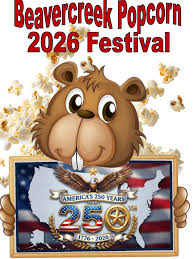
- I feel like everything’s coming together. I attended college at Valparaiso University, located in the same city where Orville Redenbacher headquartered his gourmet popcorn business. Now, I’m in the process of making arrangements to sell and sign copies of That Beast Was Not Me at the annual Beavercreek Popcorn Festival, held the weekend after Labor Day in Beavercreek, Ohio. The wildly popular event draws thousands of people. This year, the dates are September 12 and September 13. I plan to be there on the 12th. If you’re in the area, come out for a guaranteed good time!
-
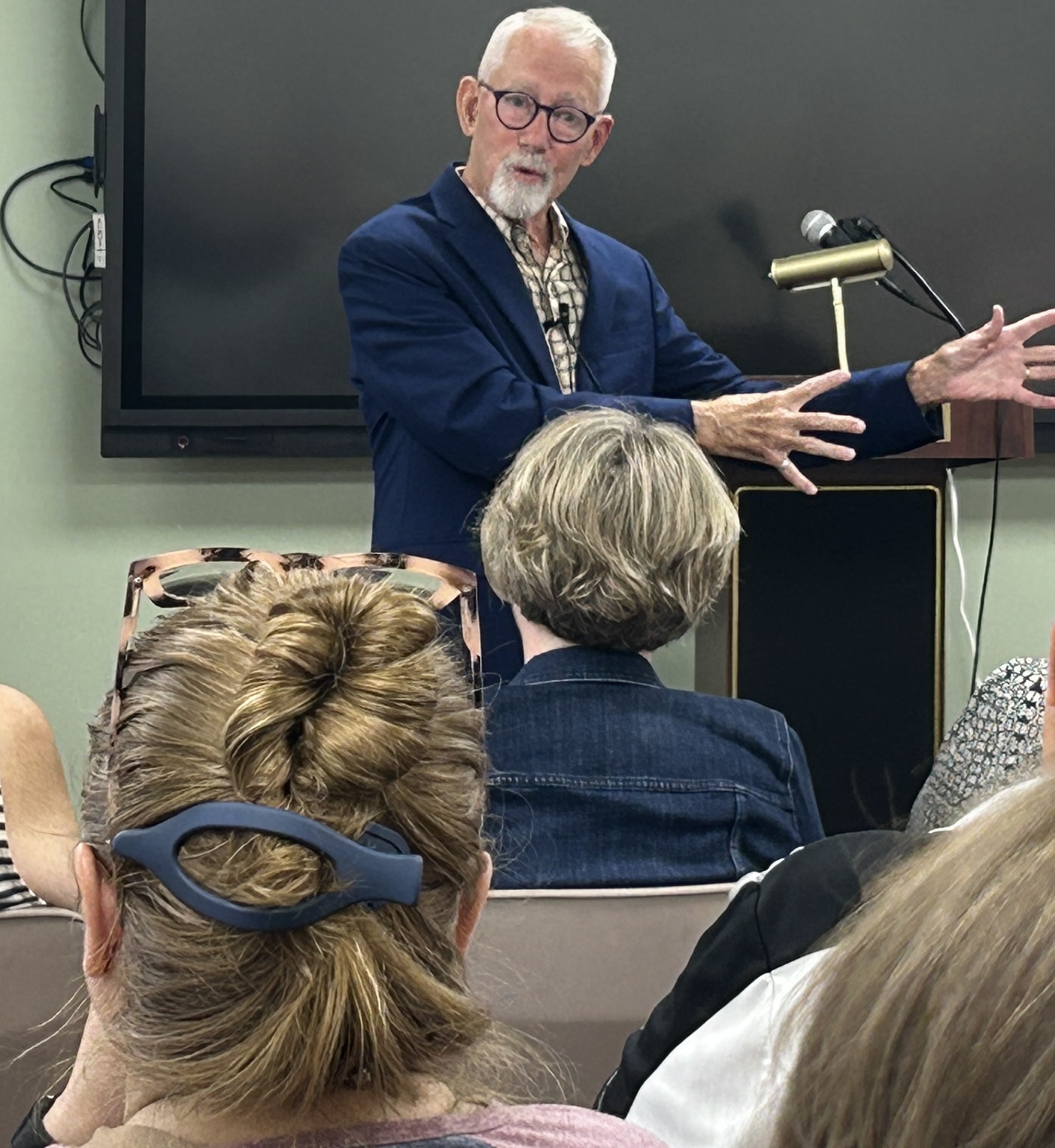
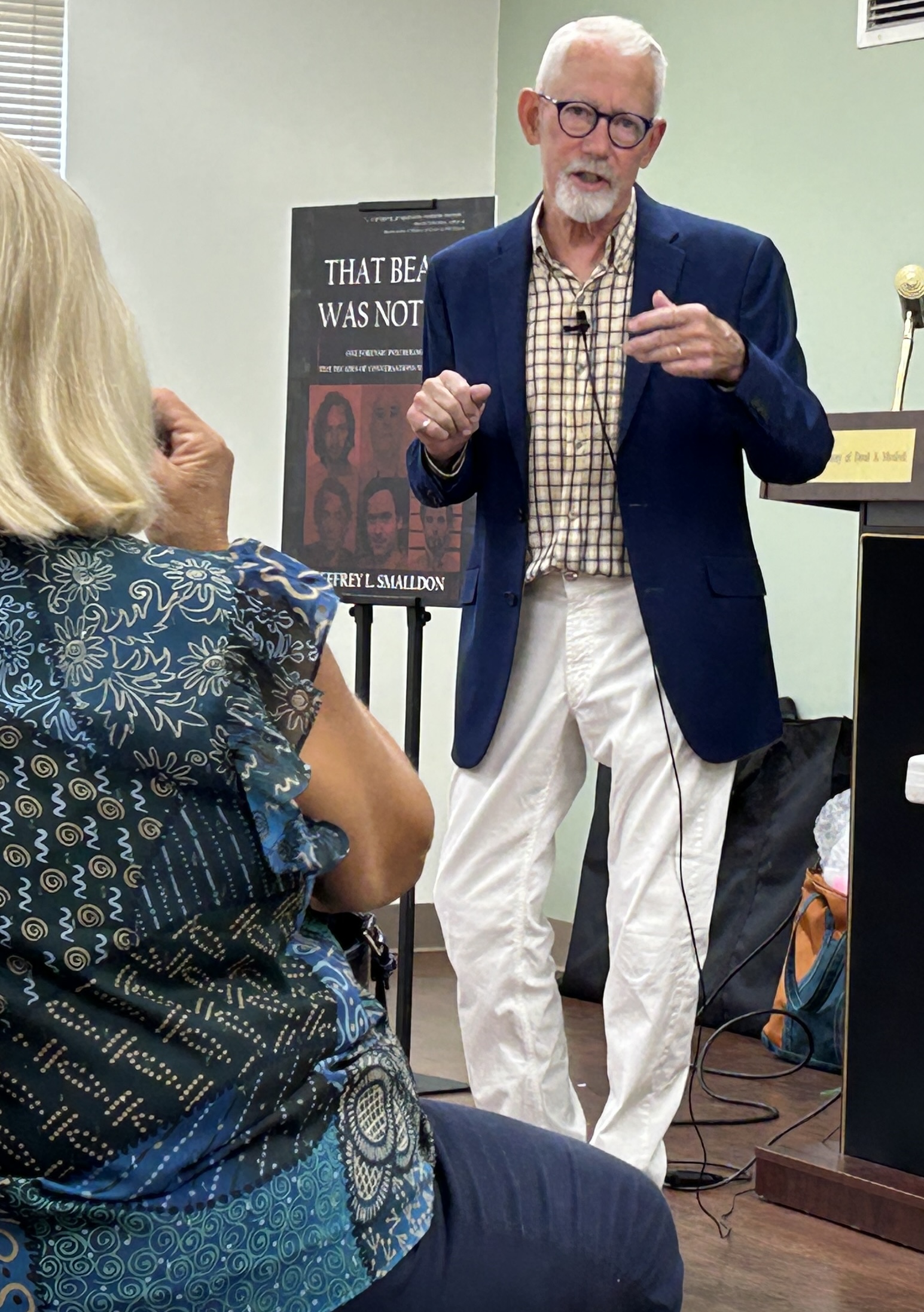
On Saturday, August 22, I was the guest presenter at the Sewickley Public Library in Sewickley, Pennsylvania. Sewickley is located about thirty miles northwest of Pittsburgh. I’d never been there before. Only later did I learn that USA Today had named it America’s #1 small town. I was stunned by the amazing residential architecture, the beautiful tree-lined streets, and the buzzing “downtown,” full of all kinds of funky and interesting independent shops.
I owe thanks to organizer Sarah Davies and her husband Joe. Sarah issued the invitation, helped with logistics, and managed to generate a lot of interest among members of the Sewickley community. The turnout was great, there was great energy, and the audience members asked all kinds of excellent questions. A great day.
- On August 4, Dani Doody, who sponsors the popular Dani_after_Dark Book Club, reviewed That Beast Was Not Me in a review session that lasted close to two hours! It was gratifying to hear so many nice things said about my book. You can watch Dani’s review here.

- On July 25, I participated in the first annual Coshocton Book Fest in Coshocton, Ohio. Organizer Maida Surdyk did a stellar job, and the historic Lake Park Pavilion was a perfect setting. I enjoyed selling and signing books in the same space where many giants of the Big Band era had performed. I’m already looking forward to next year!

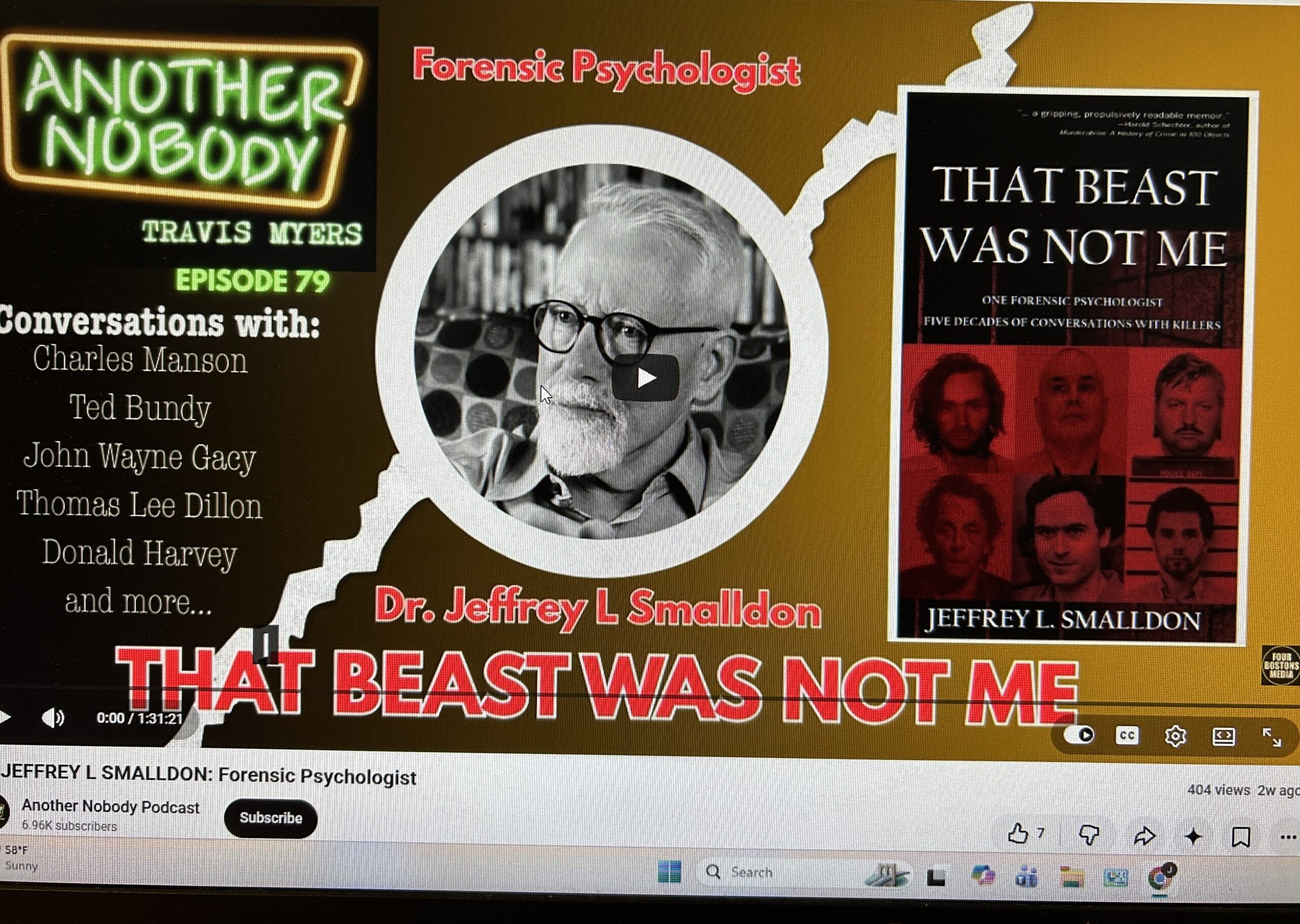
- On July 23, podcaster extraordinaire Travis Myers had me as his guest on the Another Nobody podcast (“I’m Travis Myers, just another nobody”). Travis is a knowledgeable former Bronx detective. He prepares well and he’s a hoot. For anyone who might be interested, here’s a link to the interview.
The Reading Rounds
A few more books this time around, with shorter commentaries.
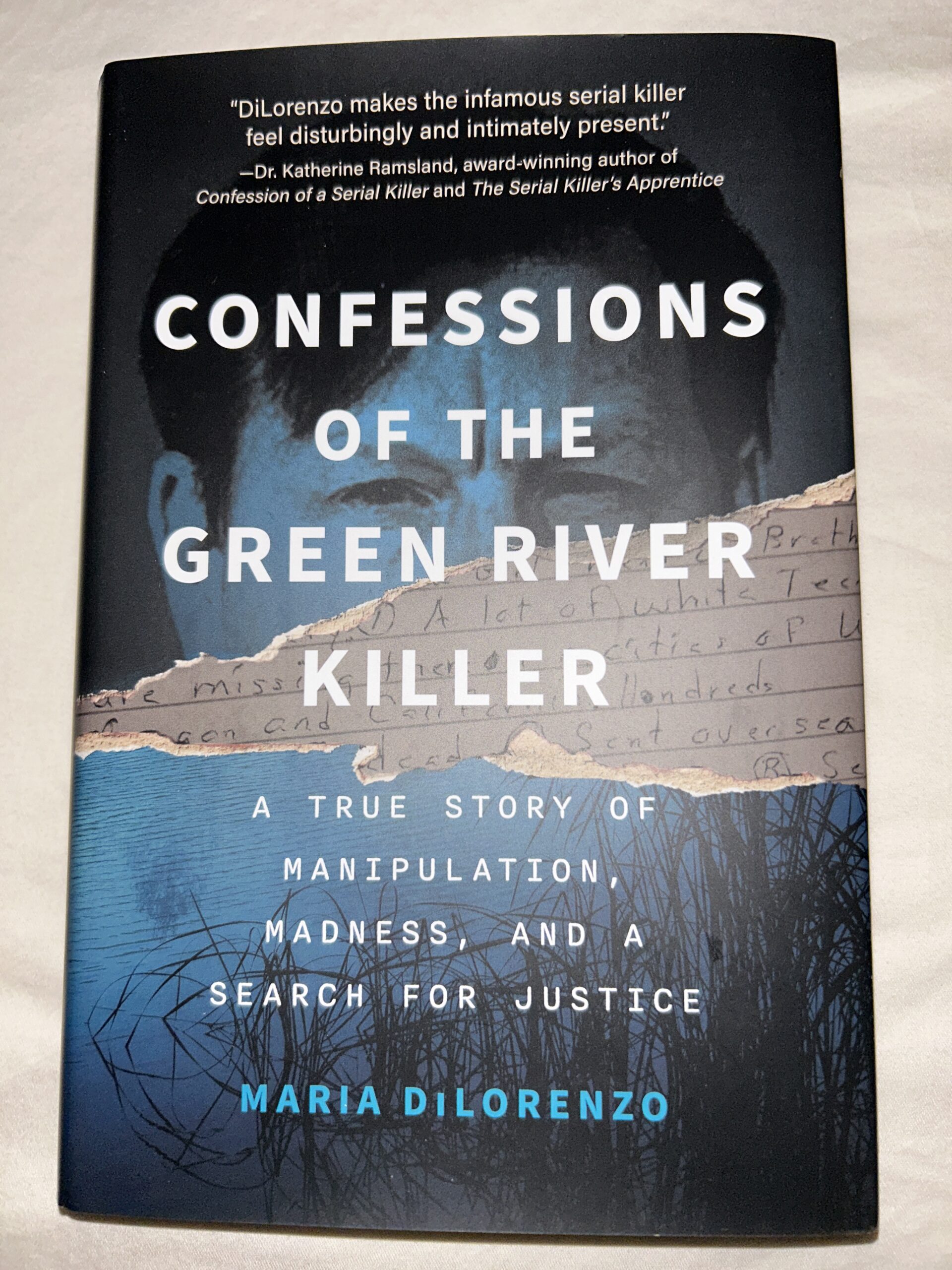
Confessions of the Green River Killer
by Maria DiLorenzo (Crooked Books)
To be honest, I struggled with this book. Maria DiLorenzo worked hard to engage the attention of serial killer Gary Ridgway, all the while compiling material for the book she was determined to get published. She succeeded in getting Ridgway to respond to her letters. Then, at least according to her, she and Ridgway talked by phone on a daily basis for well over the year. He would end each of their conversations by telling Maria, “I love you.” The author seemed only dimly aware of the near-certainty that she had become a walking, talking masturbatory stimulus.
For readers unfamiliar with the Green River case, Gary Ridgway was found guilty of murdering forty-nine women between 1982 and 1998. The murders took place in the Pacific Northwest. In addition to being a remorseless killer, Ridgway was a necrophiliac.
At many points throughout this book, DiLorenzo comes across as a breathless fangirl. It might not have been what she intended, but it’s what came through. At one point she writes of her belief that Ridgway had become “a friend” of hers. At multiple points throughout her narrative, she indulges her taste for melodrama and talks of holding a Ridgway letter in her hand as if it’s a kind of holy grail.
In the Acknowledgments section of her book, she includes a casual, almost jovial nod to Mark David Chapman, John Lennon’s killer. Go figure.
Finally, the writing is sloppy, clunky, often ungrammatical, and cluttered with clichés (“with bated breath” and so on). That said, the book contains a lot of useful information for readers wanting to know more about how killers like Gary Ridgway think and behave.
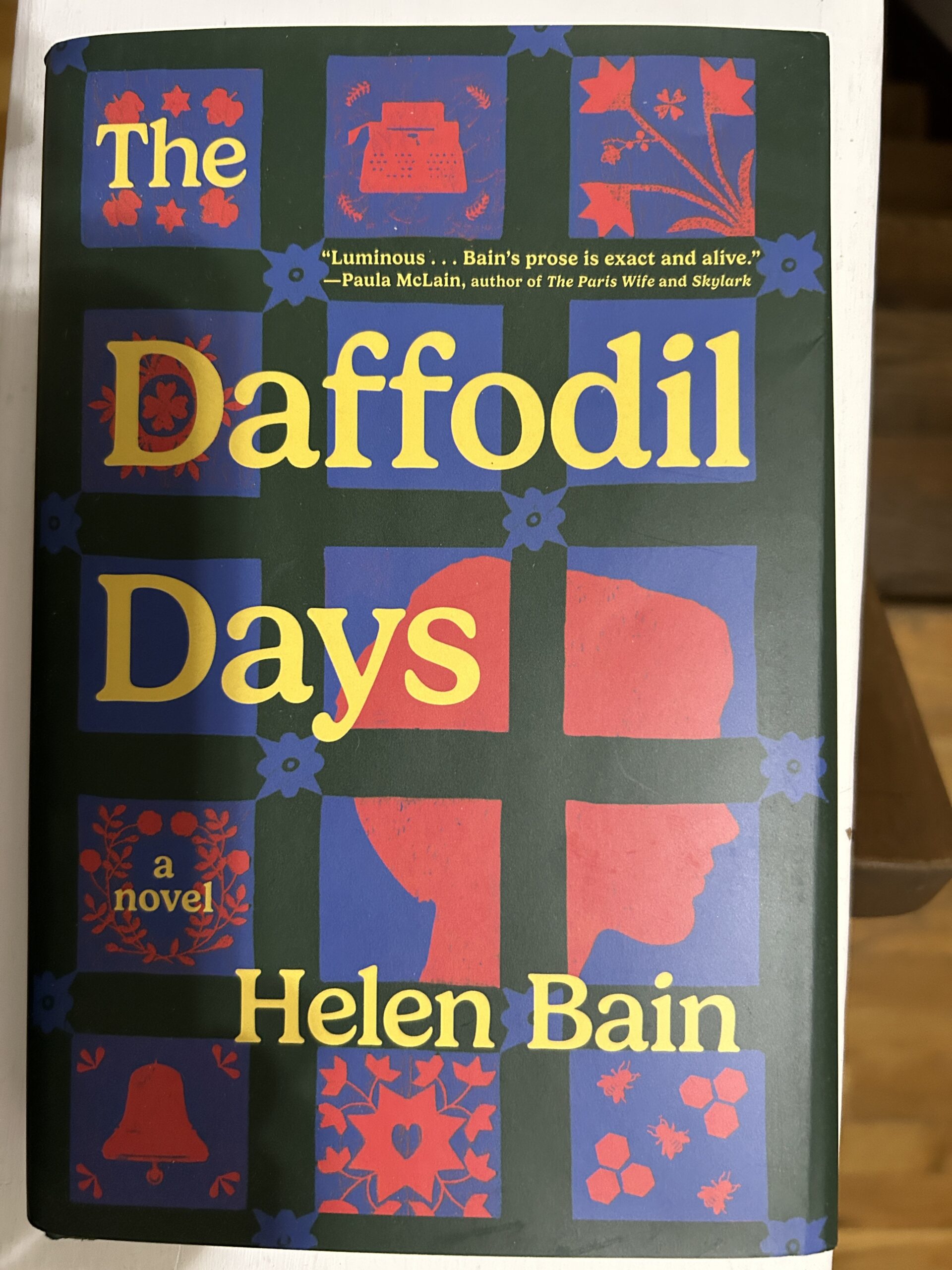
The Daffodil Days
by Helen Bain (Scribner)
I loved The Daffodil Days. For readers interested in Sylvia Plath’s life and art, it’s a gem. It consists of sixteen short chapters, most of them documenting some aspect of the year Plath spent in the small Devon village of North Tawton (August 1961 through December 1962). She lived there with her husband Ted Hughes before they had an acrimonious split (brought on primarily by Hughes’ adultery). In December 1962, Plath relocated with her two small children to a flat in London. She was thirty years old when she died by suicide in February of 1963.
The author chose an interesting structure. The book’s chapters are arranged in reverse order. The first chapter is set on the day when a cleaning woman named Nancy Axworthy closes up Court Green, Plath’s and Hughes’ North Tawton residence, after Plath’s departure for London. From there, the chapters move backward in time.
There’s an uncommon grace about this book. It’s beautifully written, and it features everyday people whose lives intersected (or could have) with Plath’s during a period that lasted only about fifteen months. The man who came to install Plath’s new washing machine. The saleswoman in a fashionable store in nearby Exeter where Plath goes looking for a dress. The surgeon who’s a near neighbor. The woman who assists Plath with childcare. A bellringer at the church next door to Court Green. The list goes on.
Highly recommended.
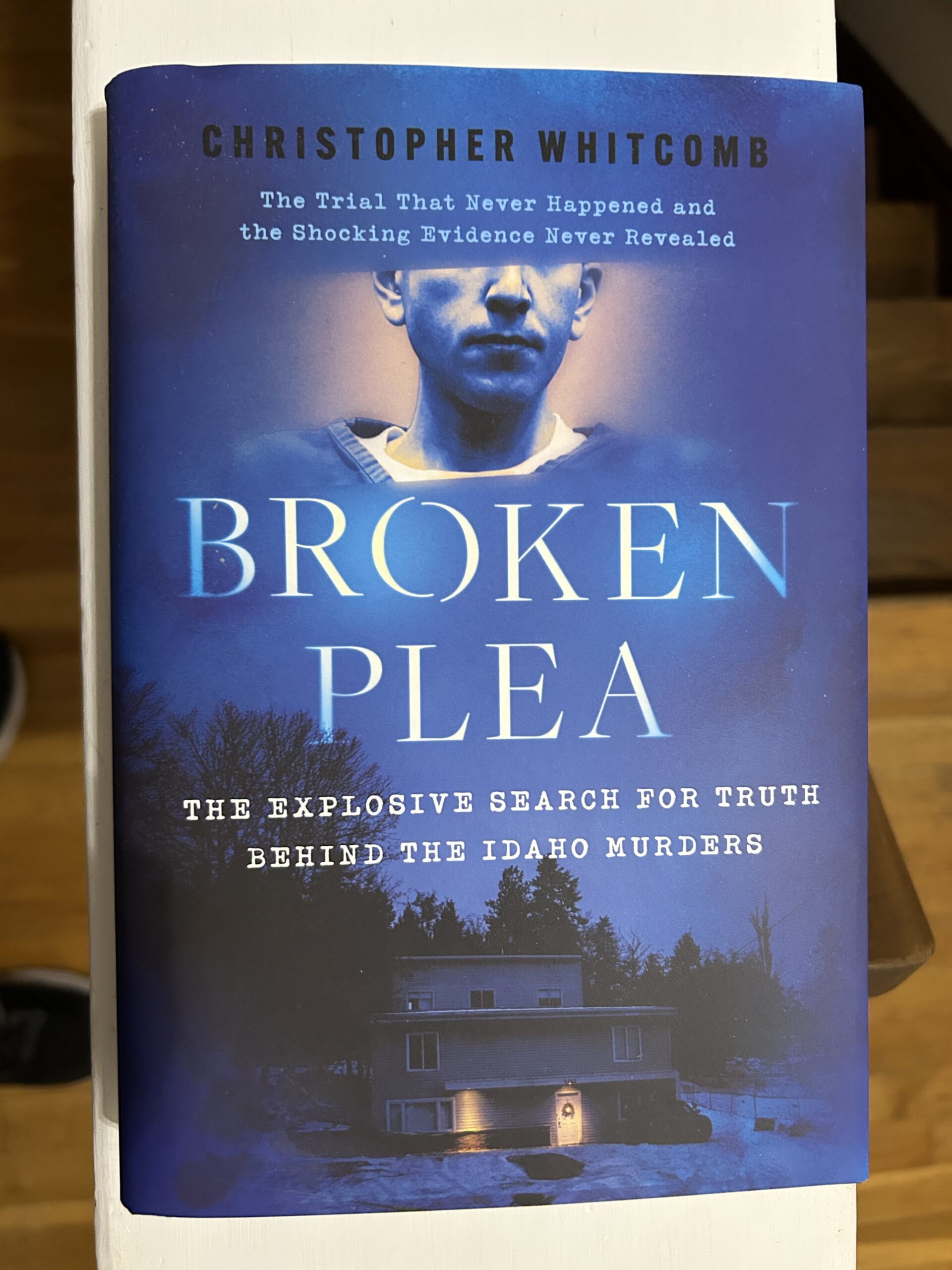
Broken Plea
by Christopher Whitcomb (Harper Select)
Former FBI agent Christopher Whitcomb chose this subtitle for his book about the quadruple homicide that occurred at 1122 King Road in Moscow, Idaho in November 2022: “The Trial That Never Happened and the Shocking Evidence Never Revealed.”
The first reference is to Bryan Kohberger’s plea deal, which precluded the need for a trial. Kohberger was allowed to plead guilty to murdering Kaylee Goncalves, Madison Mogen, Xana Kernodle, and Ethan Chapin in the off-campus house where they lived. The prosecutors who handled the case offered Kohberger the opportunity to plead guilty and avoid a possible death sentence without attaching what most observers of the case would have expected as an important condition. For reasons that still haven’t been fully explored, Kohberger was never required to go on record with either an explanation for why he did what he did, or an explanation of how he did it.
The second reference is to Whitcomb’s contention that the police badly botched their investigation and failed to consider evidence that may have implicated someone other than Kohberger.
Before taking up Whitcomb’s book, I’d read at least three other book-length accounts of “the Idaho murderers,” so I was at least reasonably well-informed about the case. That didn’t help save me from the feeling of being lost in a sea of details that sometimes seemed relevant but often didn’t.
Two of Whitcomb’s favorite words are “apparently” and “seemingly.” His book is a “follow me into the weeds” analysis of police protocol, “apparent” prosecutorial misconduct, ambiguous evidence, and finger-pointing. He finds it extremely difficult to believe that at least one of the two unharmed inhabitants of the King Road house wasn’t somehow involved in the murders.
If you choose to read this book, I recommend that you proceed with caution. The analysis often becomes tedious, and the oblique insinuations about people who were traumatized by the events of 11/13/22 are a little hard to stomach.
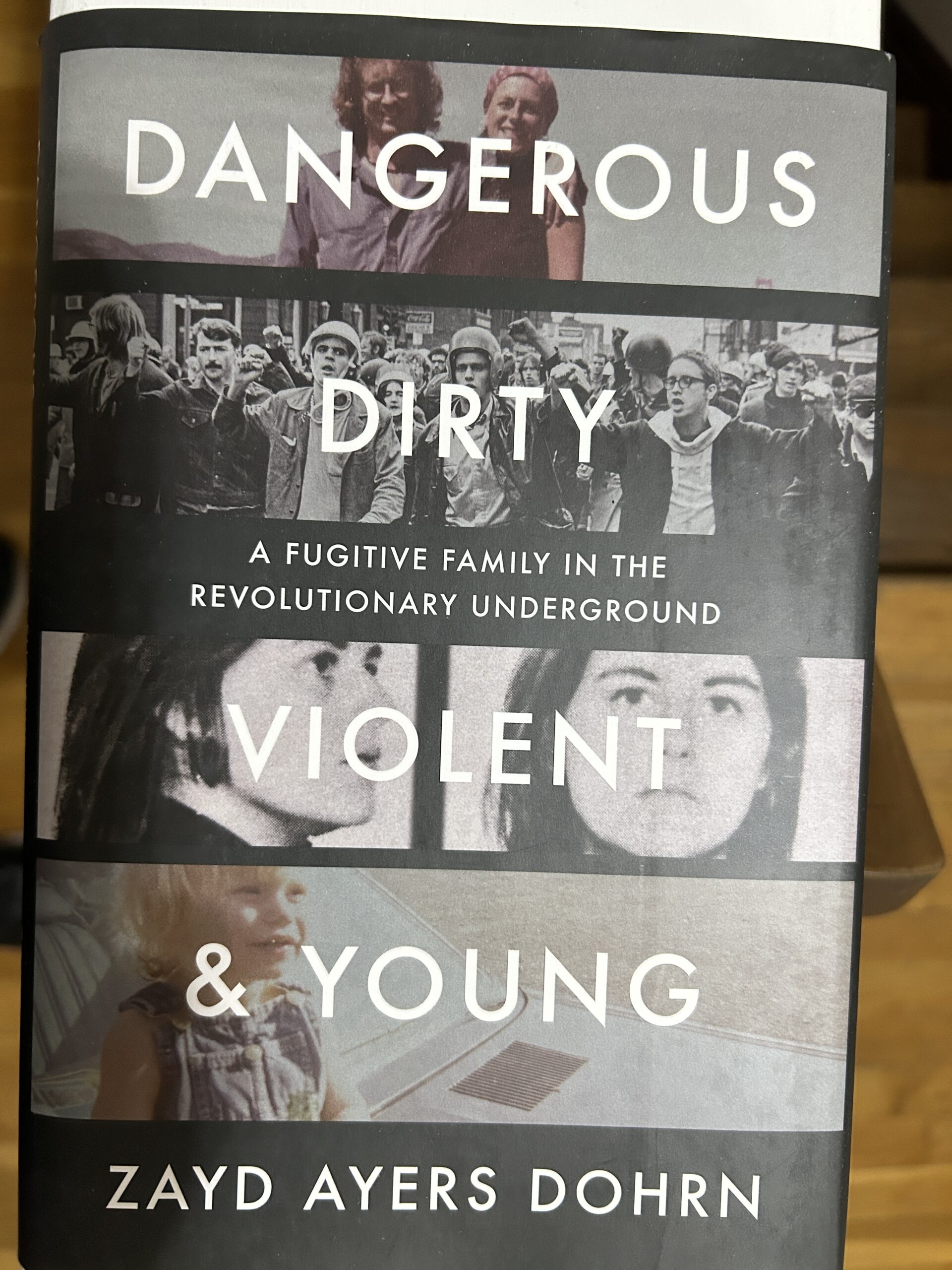
Dangerous Dirty Violent & Young
by Zayd Ayers Dohrn (W.W. Norton & Company)
Zayd Ayers Dohrn is the son of William Ayres and Bernadine Dohrn, founders of the Weather Underground. This book is his attempt to make sense of his parents’ lives and moral choices, and to try to come to terms with their legacy.
It’s a riveting account. Can violence ever be justified as a means of grinding to a halt the machinery of a corrupt and violent government? Isn’t history replete with instances when the answer to that question was a resounding yes? Who’s to be the judge of when, where, and to what degree violence can be justified?
Sprinkled throughout the book are Dohrn’s thought-provoking questions about fate, choice, and the malleability of identity. I thought one passage was especially interesting. Dohrn refers to the dilemma that his father Bill Ayres faced when he was nineteen years old and at a crossroads in his life. Ayres considered joining the military but then thought better of it. Instead, he continued his search for clues about who he was and who he wanted to become.
“I find this moment fascinating,” writes Dohrn, “one of those branching paths in the road maps of our own identities, when we are forced to choose between different possibilities. How much randomness hides in those choices, which often seem inevitable in hindsight. How easily each of us might have become someone else [emphasis added].”
For readers with even the slightest interest in the literature of 60’s radicalism in the United States, this book is essential. I highly recommend it.
Regime Change
by Maggie Haberman and Jonathan Swan (Simon & Schuster)
Please, just read it. One phrase I find hard to forget: “a walking moral hazard”
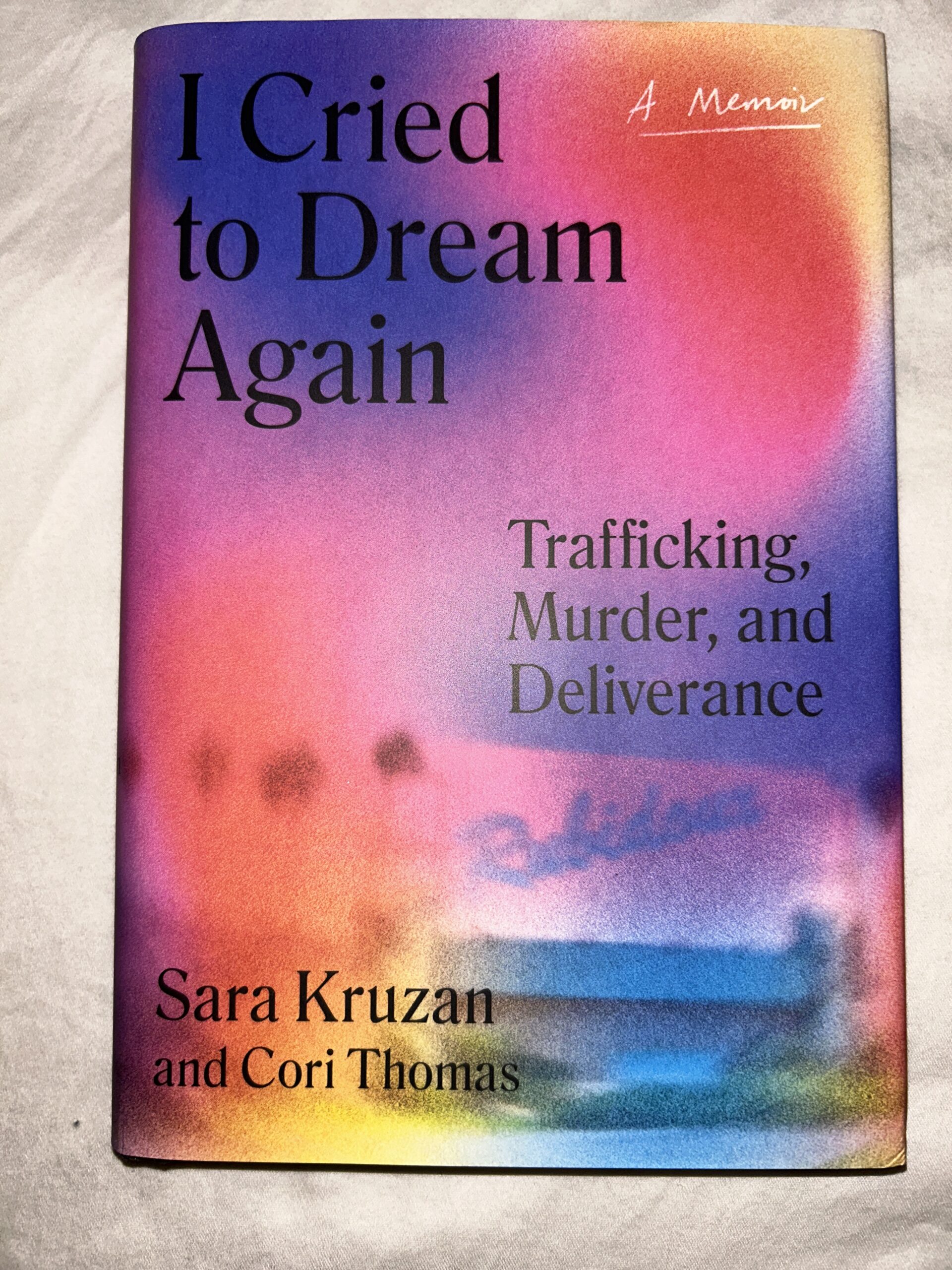
I Cried to Dream Again
by Sara Kruzan and Cori Thomas (Pantheon Books)
This is a sad, poignant, and ultimately enraging account of child exploitation and sex trafficking. It tells the story of an 11-year-old girl from a neglectful, abusive household who, on her way home from school one day, accepts when an older man with a classy car invites her to accompany him to get an ice cream cone.
The story that follows is all too familiar. The initial love bombing; the allure of money and status; small, incremental steps that result in the trafficker’s complete control over his victim’s life; violence and ongoing degradation; the erosion of the victim’s self-esteem and sense of autonomy; the victim’s thwarted attempts to break free; and, in the end, some sort of crisis that often results in the victim’s imprisonment.
At age 16, Kruzan kills her abuser and ends up being sentenced to life in prison by an utterly unsympathetic judge.
Due to a change in the law; because someone she encounters in prison encourages her never to give up the fight for her freedom; and because a team of outside supporters lobby relentlessly on her behalf, she is finally released after serving twenty years.
Following her release, she becomes an outspoken advocate for trafficking victims and helps to a pass a law that protects victims from “disproportionate sentencing as a result of crimes against [the victims’] abusers.”
Kruzan’s book provides an unflinching look at the dynamics that often play out in sex trafficking cases. It’s sometimes hard to read, but the effort is worth it.
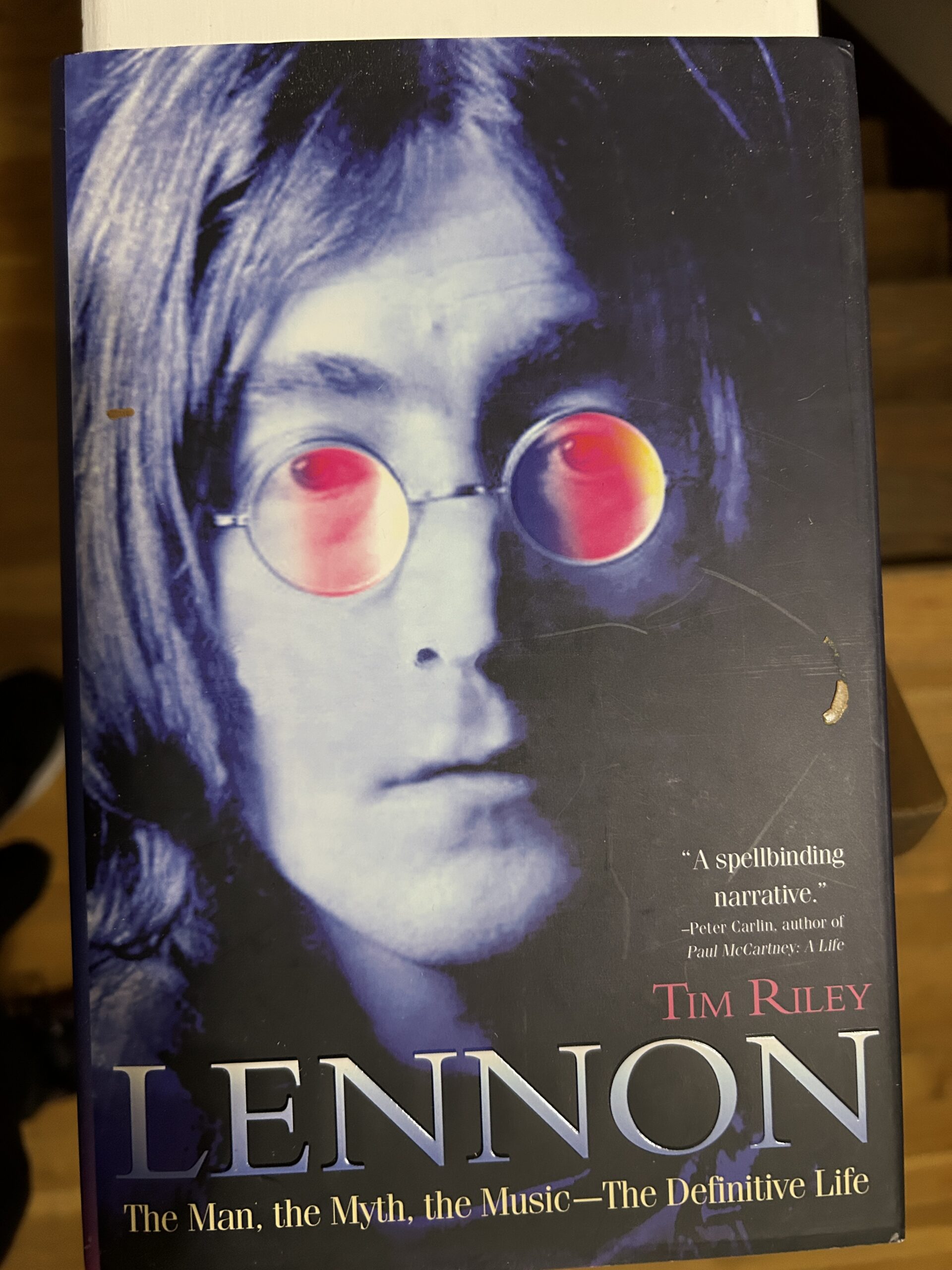
Lennon
by Tim Riley (Hyperion)
Numerous biographies have been written about John Lennon. I’ve read most of them because Lennon’s always been my favorite Beatle – and because from a psychological standpoint, he has to be one of the most fascinating public figures of the latter half of the twentieth century.
So, why another Lennon biography? Riley set his sights high. The phrase “the definitive life” appears in his book’s sub-title. Does the book qualify as that?
I vote yes.
One appeal of Riley’s account is that it never sanitizes the qualities that often made Lennon such a difficult person to be around. He had a corrosive, often mocking sense of humor; he could be extraordinarily self-centered; he often drank too much and used too many drugs as a way of erecting a partial buffer against his profound emotional pain, rooted in the tragedies of his childhood; he was eccentric to a fault; he was a highly opinionated loudmouth; and there were many occasions when he seemed to have no filter at all.
But he was also highly sensitive and brilliant. Plus, he produced a catalogue of songs that have stood the test of time. He provided the edge that complemented Paul McCartney’s sweetness. The two fought like brothers but never relinquished the love and mutual respect that bound them together when they were teenagers in Liverpool.
Riley’s biography covers a lot of familiar territory (inevitably), but it’s distinguished by certain points of emphasis. He’s much more critical of Lennon’s aunt Mimi, who raised him, than many previous biographers have been. He also shines a particularly harsh light on the fraught relationship between Mimi and John’s mother Julia, who was killed by a car driven by an off-duty police officer when John was seventeen. He also provides a lot of welcome detail about the peers who played important roles in John’s life during his formative years in Liverpool.
Lennon also contains a detailed and nuanced account of John’s relationship with the Beatles’ manager, Brian Epstein. He quotes Lennon as having said, “Well, [the relationship] was almost a love affair, but not quite. It was never consummated – but it was a pretty intense relationship.” Riley’s summation? “In Lennon’s circle, Epstein became a new boundary to bounce off of, a close friend who doubled as a bumper car into which Lennon rammed his macho bluster.”
Whether Riley’s account is really “the definitive life” will, of course, be hotly debated among Lennon obsessives (of which there are many). For now, it’ll do. At 661 pages, it contains plenty of new information about the Lennon story. Highly recommended.
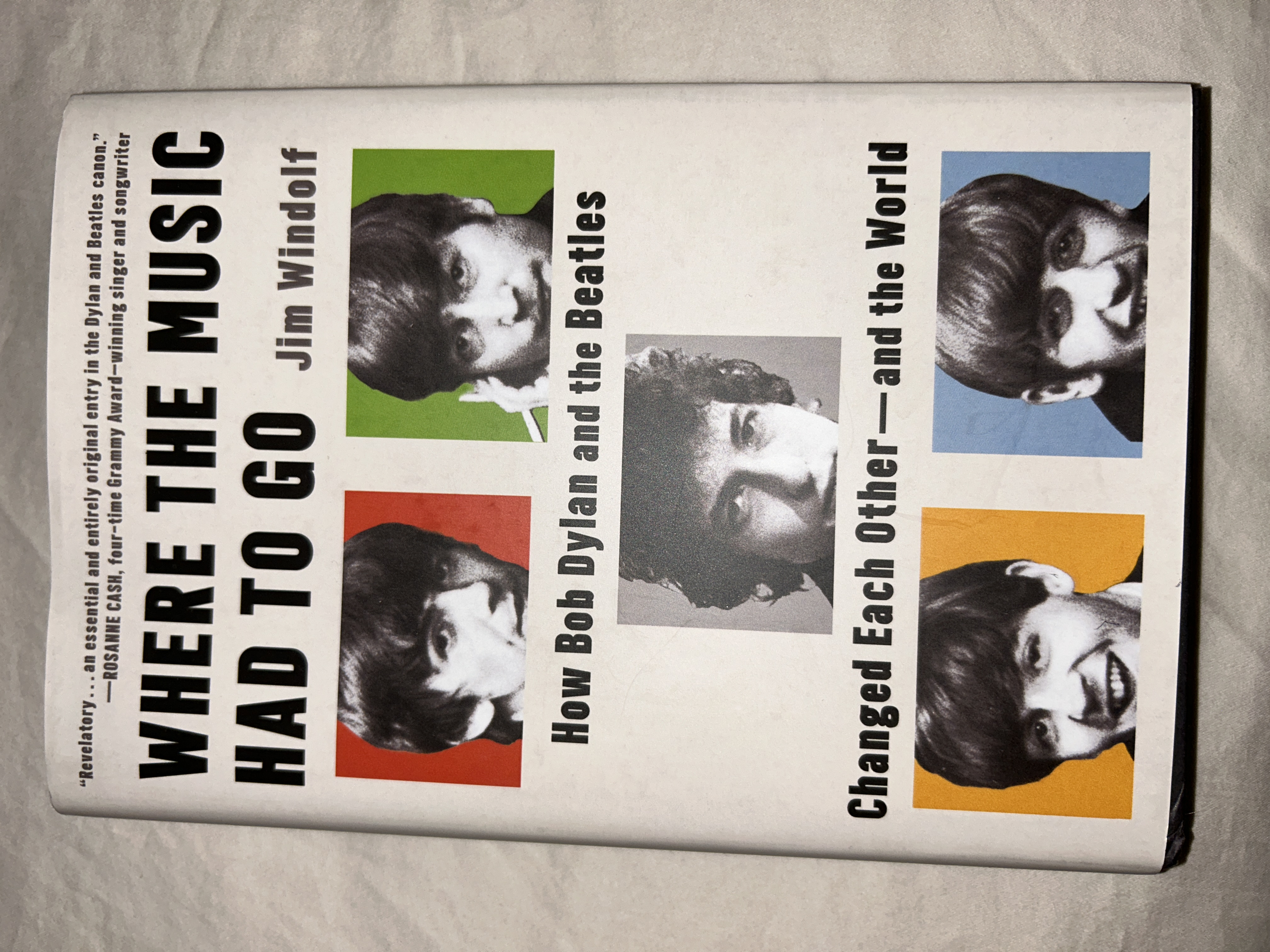
Where the Music Had to Go
by Jim Windolf (Scribner)
Where the Music Had to Go gets my vote as the clunkiest book title of 2026.
That said, the book still might be worth your time. Its focus is the intertwining careers of Bob Dylan and the Beatles. A lot of this is old material, but Windolf’s effort – sometimes it seems like a bit of a strain – to connect the strands of the artists’ trajectories offers plenty of illumination.
Dylan was blown away when he first heard the Beatles: “Did you hear that? Fuck! Man, that was fucking great. Oh, man – fuck!” That was more than a year before Dylan’s turn to “electric” music.
In a later interview, Dylan would say of his friends and competitors, “Everybody else thought they were for the teenyboppers, that they were gonna pass right away. But it was obvious to me that they had staying power. I knew they were pointing the direction of where music had to go. I was not about to put up with other musicians, but in my head the Beatles were it.”
Dylan’s seismic impact on the Beatles in the mid-60’s is well-known. Without Dylan, there would almost certainly not have been a Rubber Soul.
Much seems familiar here, but Windolf’s analysis of how Dylan’s path and the path of the Beatles intersected and intertwined during the decades of the 60’s and 70’s documents an essential chapter in the history of American popular music during the second half of the 20th century.
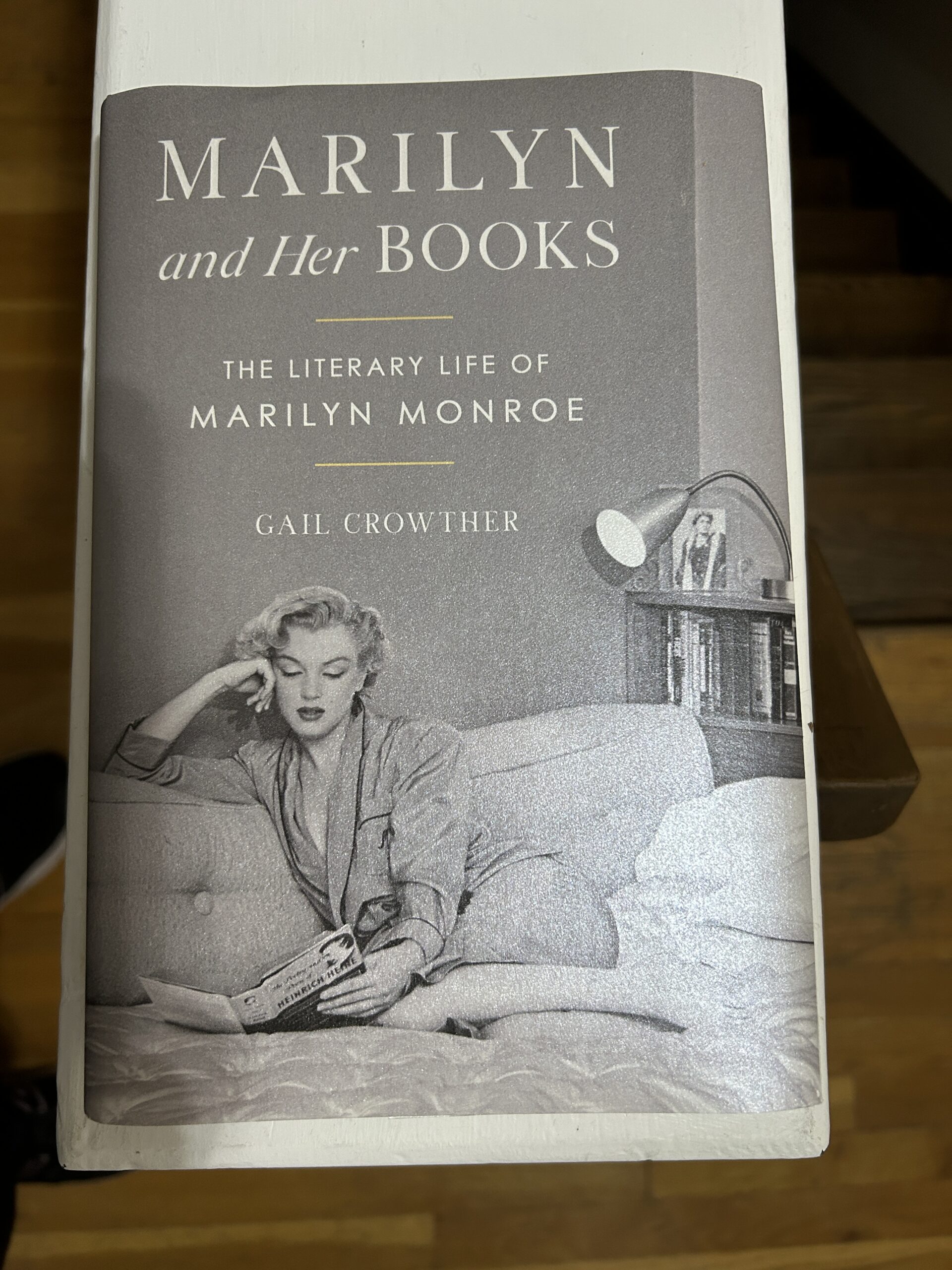
Marilyn and Her Books
by Gail Crowther (Gallery Books)
Gail Crowther has distinguished herself as an engaging, always entertaining chronicler of the lives and art of female pioneers like Sylvia Plath, Ann Sexton, and Dorothy Parker. Now, timed to coincide with the 100th anniversary of Marilyn Monroe’s birth, she embarks on a delightful, often thought-provoking journey through the books that comprised Marilyn Monroe’s extensive library.
Most importantly, Crowther sets out to undermine the myth of Monroe as a vacuous sex symbol. She does so brilliantly, revealing Monroe to have been an intelligent, highly curious woman who read voraciously and was always looking for ways to better herself.
The breadth of Monroe’s reading surprised me. Not only did she enjoy popular books like The Joy of Cooking, The New Fanny Farmer cookbook, The Little Engine That Could, and The Little Prince, she read numerous literary masterpieces, including Ulysses, Madame Bovary, A Farewell to Arms, and The Brothers Karamazov.
Crowther invites readers to accompany her on this fascinating tour of Monroe’s library. Her style is conversational and highly accessible.
One thing that makes the book so accessible is its structure. Each chapter of the book poses a question that many interested readers would probably want to ask themselves. For example, “Where did Marilyn get her books?” “Are there any surprising omissions in Marilyn’s library?” and “Why are there so many photographs of Marilyn reading?”
I highly recommend this book. It’s beautifully written, and it presents Monroe as the searching, complex, intellectual adventurer she was.
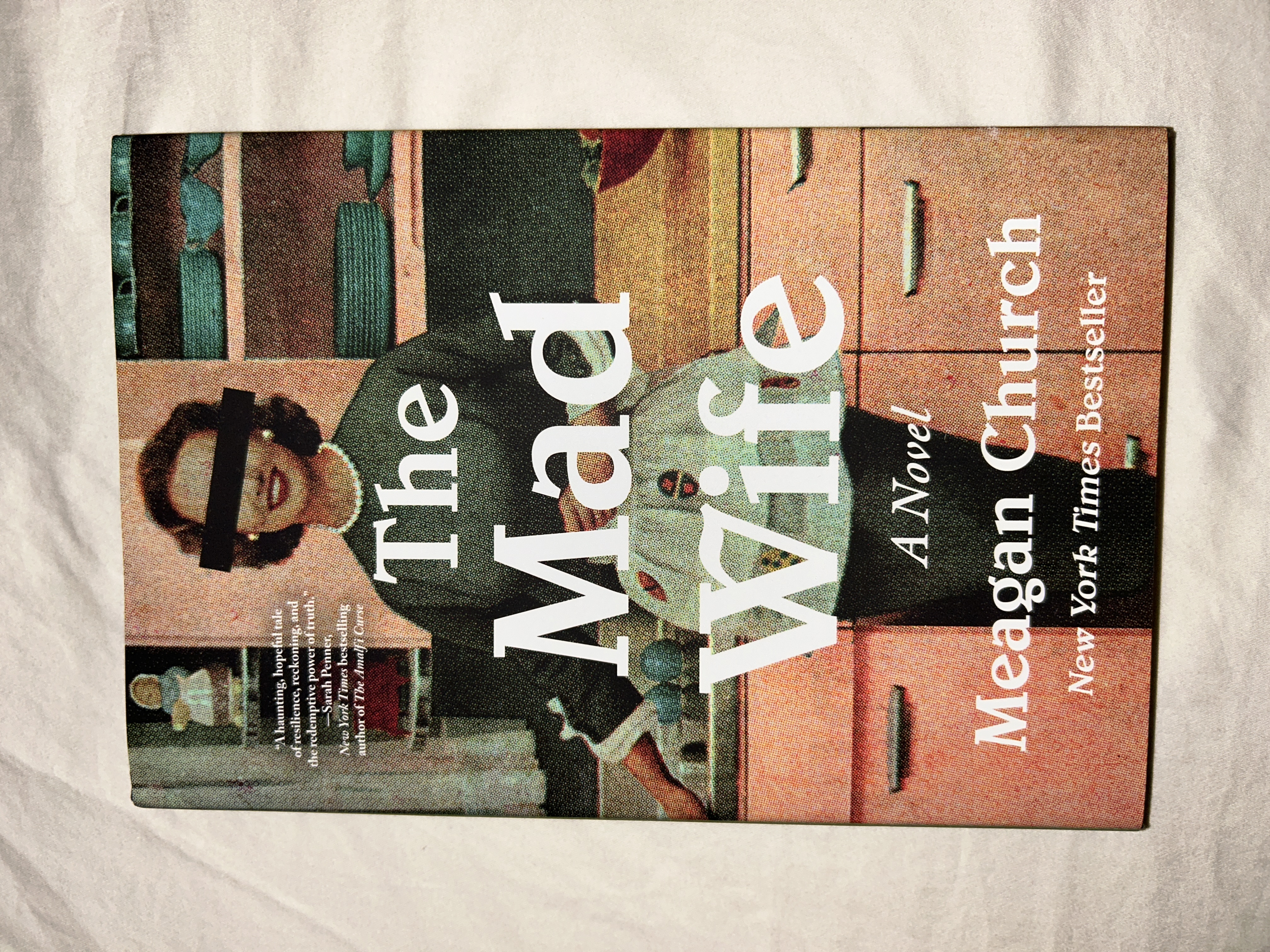
The Mad Wife
by Meagan Church (Sourcebooks)
I enjoyed this novel. It’s a satire but one with a serious message. It dissects the role of the 1950’s American housewife: the underappreciated heroics on the domestic front; the class envy; the deeply-rooted insecurities; the anxieties of parenthood; the distrust of neighbors who just might be competitors – or threats – of some obscure and frightening kind; and the tendency to lose the ability to distinguish fantasy from reality.
I won’t give away the ending, but it’s a good one. Not only does it come as a shock, it blends perfectly with the book’s central themes.
The Mad Wife is a quick and fascinating read. Among its many virtues is the fact that it got my sister and I reminiscing about our mom’s obsession with S & H Green Stamps.
A Backward Glance
Once when I was testifying at the sentencing phase of a death penalty trial, the rambunctious prosecutor decided to attack me where he thought it might hurt me the most. He took aim at my personal opposition to the death penalty, which I’d acknowledged under friendly questioning from defense counsel when I was being qualified as an expert witness.
“Isn’t it true, Dr. Smalldon, that you are personally opposed to the death penalty? Isn’t that what you testified to about ten minutes ago?”
“Yes”
“And are you trying to tell the members of this jury that your personal opposition to the death penalty hasn’t biased you in favor of the defendant?”
“Yes, I am. My personal feelings about the death penalty have had nothing at all to do with the way I conducted my evaluation in this case, and they haven’t influenced the opinions I’m here to enter into the record today.”
“Okay, doc, if you say so. We’ll let members of the jury decide what to believe. Let’s talk for a minute about what you refer to as your personal opposition to the death penalty. I want to test the strength of your opposition. You consulted for the defense on the case involving William “Pee Wee” Garner. Isn’t that correct?”
“Yes”
“And isn’t it true that Pee Wee Garner was found guilty of burning down a house and killing five children?”
“Yes.”
“And you don’t think he deserved the death penalty?”
“My personal opposition to the death penalty doesn’t depend on how horrific the facts of any particular case are.”
“Okay, just wanted to make sure. How about the case of Willie “Flip” Wilson, up in Youngstown. Remember the Labor Day Massacre? Williams executed four men in a drug-related turf war. Did you think he deserved the death penalty?”
“Same answer.”
The judge, interrupting the prosecutor’s line of questioning: “Alright, I’m not going to allow any more of this. It serves no purpose since it has nothing to do with why we’re here today. Dr. Smalldon has stated his personal position, and he’s testified that it had no impact on the opinions he formed in this case. Move on counsel.”
The prosecutor did as the judge directed him to do.
Later on, after the jury had come back with a recommendation of life without the possibility of parole for at least thirty years (rather than death), I gave a lot of thought to the implications of my blanket opposition to the death penalty. Did it amount to sympathy for criminals who might not be deserving of any? Even though I worked hard to make sure that my personal beliefs didn’t interfere with the objective approach my job required, did it somehow place me on the opposing side of a contest featuring prosecutors who were only trying to apply the law as it related to “the worst of the worst,” a phrase they routinely used to describe the criminals who they thought deserved to be killed by the state?
I answered no to both those questions, but that didn’t stop me from continuing to wonder if there were – or should be – any limits to my opposition to state-sponsored killing.
What about the convicted killer who slit the throats of his two young children while they were asleep in their car seats? The one who buried his victim alive? The young mother who committed a quadruple homicide? The man who used a high-powered rifle to gun down five strangers in five separate incidents? The man who placed his incapacitated victim on some railroad tracks, hoping she’d get run over by a train?
Recently, I had occasion to re-visit this subject when I was reading psychologist Samantha Stein’s Evil at Our Table, which chronicles the many years Stein spent conducting therapy with sex offenders, and assisting the state of California carry out its awesome responsibility of determining which among sex offenders who had already completed their prison sentence needed to be hospitalized indefinitely because they were thought to represent an ongoing threat to the public.
Stein struggles as she tries to find the right balance between doing the state’s work in the most objective way she can, and dealing in a realistic way with the personal feelings she sometimes develops as a result of her therapeutic – as opposed to evaluative – work with a diverse range of sex offenders, some of whom want to con her, some of whom seem not to feel even the slightest remorse for their criminal conduct, and some of whom genuinely want to change themselves and their lives.
In the end, she opts for an attitude of radical empathy. She quits her job and refuses to accept that anyone, especially when viewed through the prism of their life experiences, should be seen as disposable – unworthy of empathy and attempts at understanding.
“Sitting in therapy every week for years with a man who has molested a child, or raped a woman, exposes me to the terrible pain of his victim. But at the same time, it forces me to get to know this man in a deeply personal way. I learn about his childhood, his fears, his trauma, his passions, his losses, and his loves. And I discover that most of the time – with a few exceptions – underneath the shame, anger, and defensiveness exists a person who longs to grow, learn, change, and be in relationships, just like everyone else.”
In the book’s final chapter, called “New Pathways,” Stein reflects on the largest lesson she learned in her years of working with and evaluating men who committed horrible sex offenses: “It’s been deeply humbling for me to discover that I’m on the same continuum of humanity as everyone else” – including “the worst of the worst.”
Stein’s book reminded me of why I always had to answer no to the question, “Won’t you admit that this man, who committed these heinous crimes against others, deserves to die?”
Until next time,
–Jeff
P.S. I always try to come up with two or three songs that are either new and worth listening to, or noteworthy because they keep surfacing from the past. This time, I’ve decided to include a few of my favorite September songs.
The first one, with music by Kurt Weill and lyrics by Maxwell Anderson, is “September Song.” It’s a stalwart entry in the Great American Songbook, and it’s been covered by many artists. Perhaps most famous is the 1946 version by Frank Sinatra. But here’s a more recent, particularly languid version by former Roxy Music frontman Bryan Ferry. Listen here.
The second one, “September in the Rain,” was written in 1937 by Harry Warren and Al Dubin. Dinah Washington popularized an upbeat, jazzy version in 1961, but I prefer the slower version by Annie Lennox, formerly of the Eurythmics. Here’s the link.
And finally, “September Gurls” by Big Star. This power pop classic pretty much speaks for itself. Here’s the link.
“I was so hungry for color.” – Sylvia Plath
